
CASE STUDY
Industrial & Prototype ManufacturingNearly 40 years. No reason to change.
When an industrial heater manufacturer finds a sealant that performs, qualifies, and keeps doing its job, there’s real value in leaving well enough alone.
The challenge
In an industrial heating element, a lot depends on a relatively small amount of epoxy.
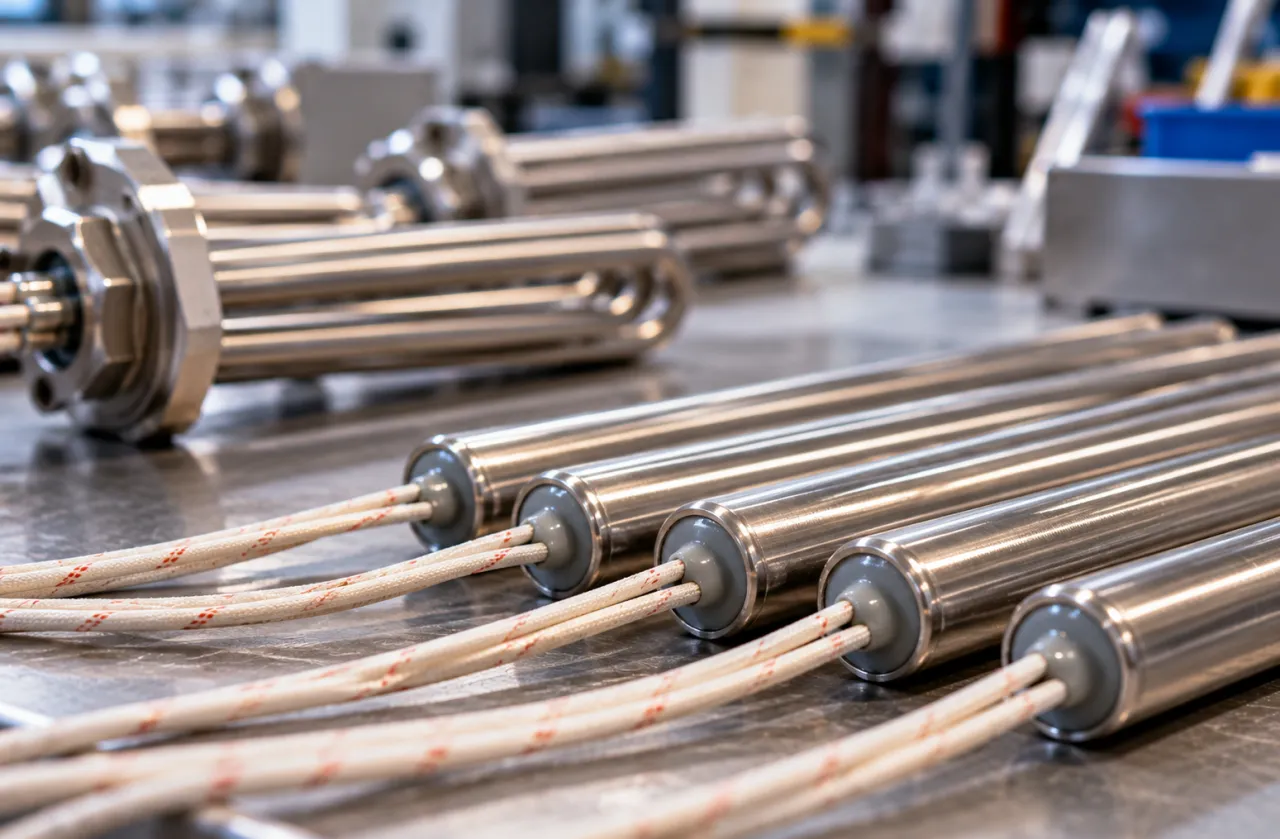
The sealed end of a heating element is one of its most vulnerable points. If moisture finds its way inside, the element can short or fail prematurely, creating downtime for the equipment and the people who depend on it.
The sealant also has to withstand the temperatures involved in the application and meet the manufacturer’s regulatory requirements.
For our customer, that includes UL recognition. Every sealant used in their heating elements must be documented in the manufacturer’s agency file, with a Relative Thermal Index (RTI) rating that demonstrates how the material performs under long-term heat exposure.
Qualifying a material takes testing, documentation, and time. Once an engineer finds a sealant that meets the requirements and performs consistently, there’s a strong incentive to keep using it.
A formulation that earns its place
Our customer has been using Anchor Seal epoxy to seal its industrial heating elements for nearly 40 years.
The material, SY5233FR, is a flame-retardant, UL-listed epoxy that meets the manufacturer’s temperature and agency requirements. In production, operators prepare the cavity, then fill it with the two-part formulation. The epoxy generates heat as it reacts and cures quickly at room temperature, making it well suited to the manufacturer’s process.
For this customer, the priorities are straightforward: temperature performance first, curing behavior second, and consistency third.
Our epoxy has continued to meet those requirements for decades.
And our role doesn’t end with providing the material. The manufacturer relies on our technical data sheets, application instructions, and consistent formulation to support its production process and qualification records.
That’s an important part of what we do. When a customer has invested the time to qualify one of our materials, they need to know it’s going to behave the same way the next time they order it—and the time after that.
The outcome
The engineer currently responsible for the application has been with the manufacturer for 16 years. The Anchor Seal epoxy was already in use when he arrived, and in all that time, it hasn’t given him a reason to reconsider it.
The sealant has remained in the manufacturer’s UL agency file without requiring new qualification work. It has performed consistently in production, and the engineering team hasn’t had to spend time solving problems with a material that already works.
A dependable sealant means fewer variables to manage, less time spent troubleshooting, and one less component to worry about in a product where reliability matters. And the relationship continues to evolve; as the engineering team explores new epoxy requirements for temperatures above 180°C, we’re part of that conversation, working with them to understand what the next generation of materials will need to do.
The original formulation has earned its place. Now we’re helping our customer think about what comes next.
Anchor Seal was in our heaters before my time, and we’ve never had a problem with how it performs.
Some things are worth keeping.
When a material works reliably for decades, there’s no reason to change it just for the sake of changing it. But when your requirements evolve, we’re here to help figure out what comes next. Tell us about your operating temperatures, agency requirements, and the performance your application demands.